Introduction and Program Framework
On November 12, 2025, together with a team from UN HABITAT held an engagement to advance the Partnership Implementing the New Urban Agenda program (PINUA), a collaborative initiative involving UN HABITAT and the government of Kenya. The program is designed to implement participatory slum upgrading across multiple counties, with current pilot projects active in Nairobi’s Ex-Grogon area and Kisumu’s Muhoroni and Kibuye regions. The core strategy centers on fostering community buy-in through social housing, the formation of cooperatives, and flexible financial models such as "rent-to-own" or rental agreements.
Site Analysis:

Historical Context and Planning Evolution
The Korogocho settlement has a long-standing history dating back to 1967. Its development has been shaped by significant milestones, including a 2001 benchmarking mission to Mumbai to study housing strategies and a comprehensive planning exercise in 2008 that mapped 2,205 plots. This planning was a collaborative effort between the Kenyan Government and Italian co-operation, which identified specific beneficiaries for development. Today, the settlement consists of eight villages, with 628 individuals currently holding individual title deeds.
Community Dynamics and Current Challenges
The engagement identified four specific villages—Korogocho A, B, Githathuru, and Kisumu Video—as focal points for ongoing infrastructure development. However, significant hurdles remain. Residents expressed dissatisfaction regarding developments on riparian land, and a pervasive "fear of the unknown" was cited as the primary obstacle to achieving full community buy-in. To address these concerns, the community suggested transitioning toward cooperative societies and utilizing joint title deeds for the program rather than strictly individual ones. Furthermore, for future mobilization, residents identified the Korogocho police station (Kwa Chief) and local schools as the most effective communal spaces for the communal spaces development program.
Site Analysis: Kahawa Soweto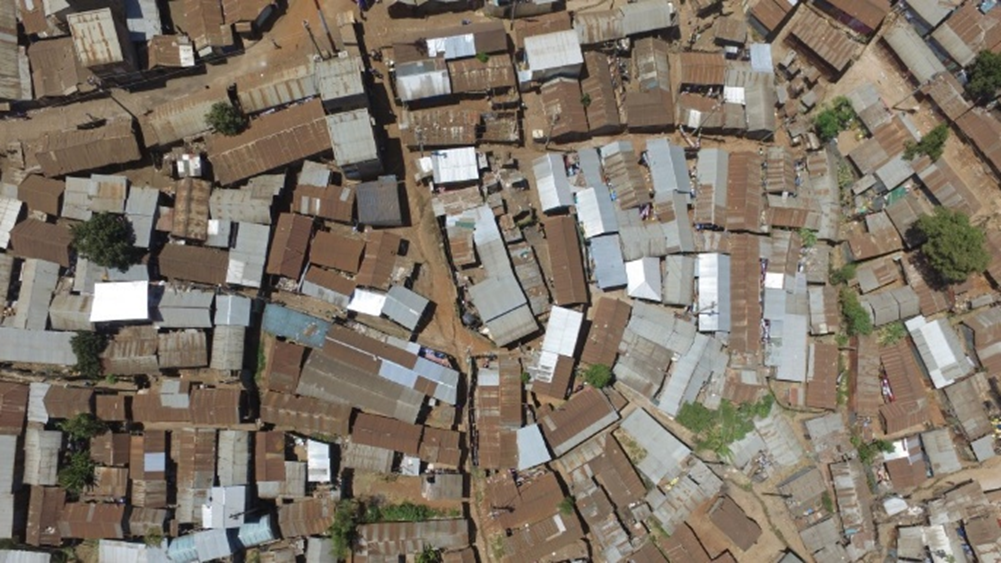
Infrastructure-Led Upgrading
In Kahawa Soweto, the upgrading process is closely tied to a 14-acre land allocation and a 117-million-shilling road project funded by the World Bank. This project encompasses nine roads, five of which are currently being completed with drainage systems. A critical component of the agreement is that title deeds will be issued only upon the successful completion of these five roads. The area, which includes approximately 850 structures, has a history of organizational support from Father Alex, the UN, and Pamoja Trust, the latter of which helped establish the "Moja Moja" saving group in 2003.
Cluster Autonomy and Future Planning
The mobilization strategy in Kahawa Soweto relies on a cluster-based management system. Each cluster holds its own certificate and is led by recognized officials. Upon the completion of the roads, these clusters are mandated to determine their own development paths, whether that involves selling land, securing private funding, or building their own social housing units. Current community requests emphasize the need for coordination with the KISIP (Kenya Informal Settlements Improvement Project) and transparency regarding timelines so that residents can plan based on the availability of their cluster titles.
Conclusion and Strategic Outlook
The engagement concluded that while significant infrastructural progress has been made, particularly in Kahawa Soweto, the success of the PINUA program hinges on addressing the psychological and legal concerns in Korogocho. Moving forward, the program must prioritize participatory planning and clear communication regarding title deed transitions to ensure the long-term sustainability of these urban upgrades.